

Artificial Intelligence and Machine Learning
Artificial Intelligence (AI) and Machine Learning (ML) are no longer futuristic concepts. They are driving massive change across industries, shaping how businesses operate and how people interact with technology. From automated customer support to predictive analytics, these technologies are transforming the world around us. Understanding AI and ML has become essential for businesses, professionals, and tech enthusiasts alike.
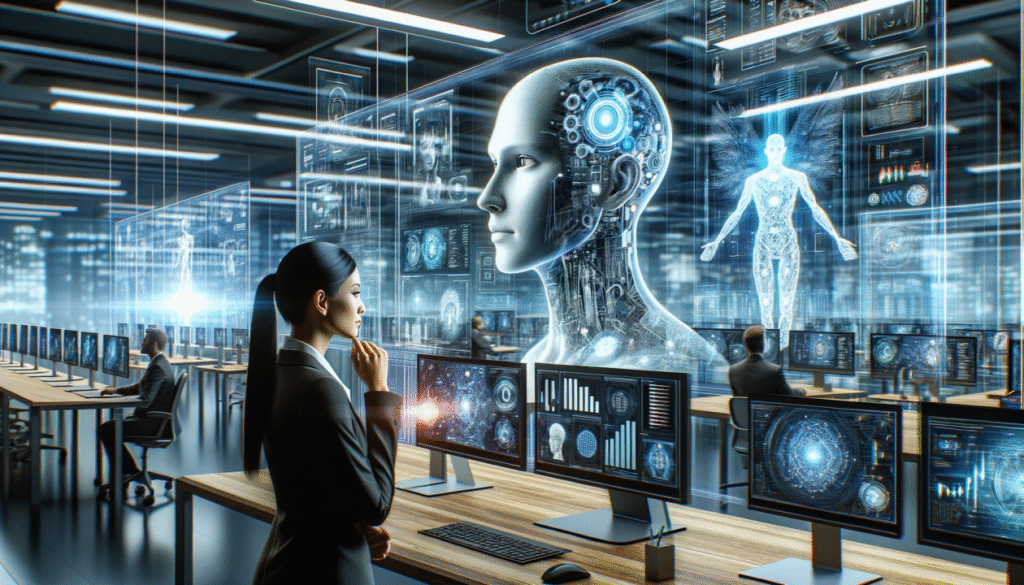
What Is Artificial Intelligence (AI)? Artificial Intelligence and Machine Learning
Artificial Intelligence refers to systems or machines capable of performing tasks that traditionally require human intelligence. These include decision-making, problem-solving, speech recognition, and understanding complex data patterns. AI systems use algorithms and large datasets to mimic human cognitive functions. The ability to learn, adapt, and improve over time makes AI an indispensable part of modern technology.
Types of Artificial Intelligence: Narrow, General, and Superintelligent AI:
- Narrow AI: Focused on specific tasks, like virtual assistants.
- General AI: Hypothetical AI that can perform any intellectual task a human can.
- Superintelligent AI: Advanced AI that surpasses human intelligence (still theoretical).
Narrow AI dominates today’s applications, providing practical solutions across multiple industries.
What Is Machine Learning (ML)? Data-Driven Learning Algorithms Explained Artificial Intelligence and Machine Learning
Machine Learning is a branch of AI that allows computers to learn from data rather than relying on explicit programming. ML algorithms identify patterns, make predictions, and continuously improve their performance as more data becomes available.
There are three main types of Machine Learning:
- Supervised Learning: Algorithms learn from labeled datasets to make predictions.
- Unsupervised Learning: Algorithms identify patterns in unlabeled data.
- Reinforcement Learning: Algorithms learn through trial and error to maximize outcomes.
Machine Learning powers many applications that we use daily, from recommendation systems on streaming platforms to fraud detection in banking systems.
Why AI and ML Are Important Today: Benefits for Businesses and Society Artificial Intelligence and Machine Learning
AI and ML are not just tech buzzwords—they provide tangible benefits for businesses and society.
- Automation: AI automates repetitive tasks, freeing employees for strategic work.
- Data-Driven Decisions: ML helps organizations analyze large datasets quickly for better insights.
- Enhanced Customer Experience: Personalized recommendations improve engagement and satisfaction.
- Error Reduction: AI minimizes human error in complex or repetitive tasks.
- Scalability: AI systems handle large volumes of data and operations efficiently.
Companies adopting AI gain a competitive advantage, increased efficiency, and the ability to innovate faster than traditional competitors.
Real-World Applications of Artificial Intelligence and Machine Learning Across Industries
AI and ML have penetrated nearly every sector.
AI in Healthcare
ML models predict patient outcomes and suggest personalized treatment plans. Hospitals increasingly use AI-powered chatbots for patient support.
Machine Learning in Finance and Banking
Financial institutions rely on AI to detect fraud, automate customer service, and assess credit risk. ML algorithms analyze trends to provide insights for investments and market predictions. AI-driven systems enhance efficiency while reducing operational costs.
AI Solutions in Retail and E-Commerce
Retailers use AI for inventory management, demand forecasting, and personalized marketing. ML-based recommendation systems suggest products to customers based on their behavior, increasing sales and customer loyalty.
Autonomous Systems and AI in Transportation
Autonomous vehicles rely heavily on AI and ML to navigate roads, detect obstacles, and optimize routes. Logistics companies use AI for predictive maintenance and route planning to save time and reduce costs.
Smart Manufacturing With Artificial Intelligence and Robotics
AI-driven robotics improve production efficiency and reduce errors. ML models optimize supply chains, forecast demand, and streamline operational processes, making manufacturing smarter and more cost-effective.
Emerging Trends in AI and Machine Learning Technologies
AI and ML are evolving rapidly, introducing new trends that shape the future.
- Generative AI and Creative Intelligence: Tools that create text, images, or videos, transforming creative industries.
- Explainable AI (XAI): Making AI decisions transparent for better trust and accountability.
- AI-Powered Cybersecurity: Detecting threats and preventing attacks in real-time.
- Edge AI: Processing data closer to the source for faster response times.
- AI in Robotics: Enhancing automation in warehouses, factories, and daily life.
These innovations continue to make AI and ML more practical, accessible, and impactful.
Challenges in Artificial Intelligence and Machine Learning Adoption
Despite the benefits, challenges remain.
- Data Privacy: AI systems require large datasets, raising security and privacy concerns.
- Bias in Algorithms: ML models may inherit biases from training data, affecting fairness.
- High Costs: Developing and maintaining AI infrastructure can be expensive.
- Skill Gap: Skilled AI professionals are in high demand, creating a talent shortage.
Addressing these challenges is essential for organizations to leverage AI responsibly and effectively.
The Future of AI and ML: Smarter Systems and Industry Innovation
AI and ML are poised to become even more integral to society. We can expect:
- Smarter, context-aware systems in daily life.
- Greater automation across industries.
- Advanced predictive analytics for healthcare, finance, and manufacturing.
- Increased integration with IoT, 5G, and edge computing.
Organizations that embrace AI early will enjoy long-term advantages, while those that delay risk falling behind in the digital revolution.
Conclusion: Why AI and Machine Learning Matter in the Modern Digital World
Artificial Intelligence and Machine Learning are no longer optional—they are essential for modern business and technological growth. They enhance productivity, improve decision-making, and transform customer experiences. As these technologies advance, their impact will touch every industry, every business, and almost every aspect of daily life. Staying informed and adaptable is crucial for anyone looking to succeed in a world driven by AI and ML.
